
He Talks Into His Phone on Dog Walks. Then AI Writes the Blog.
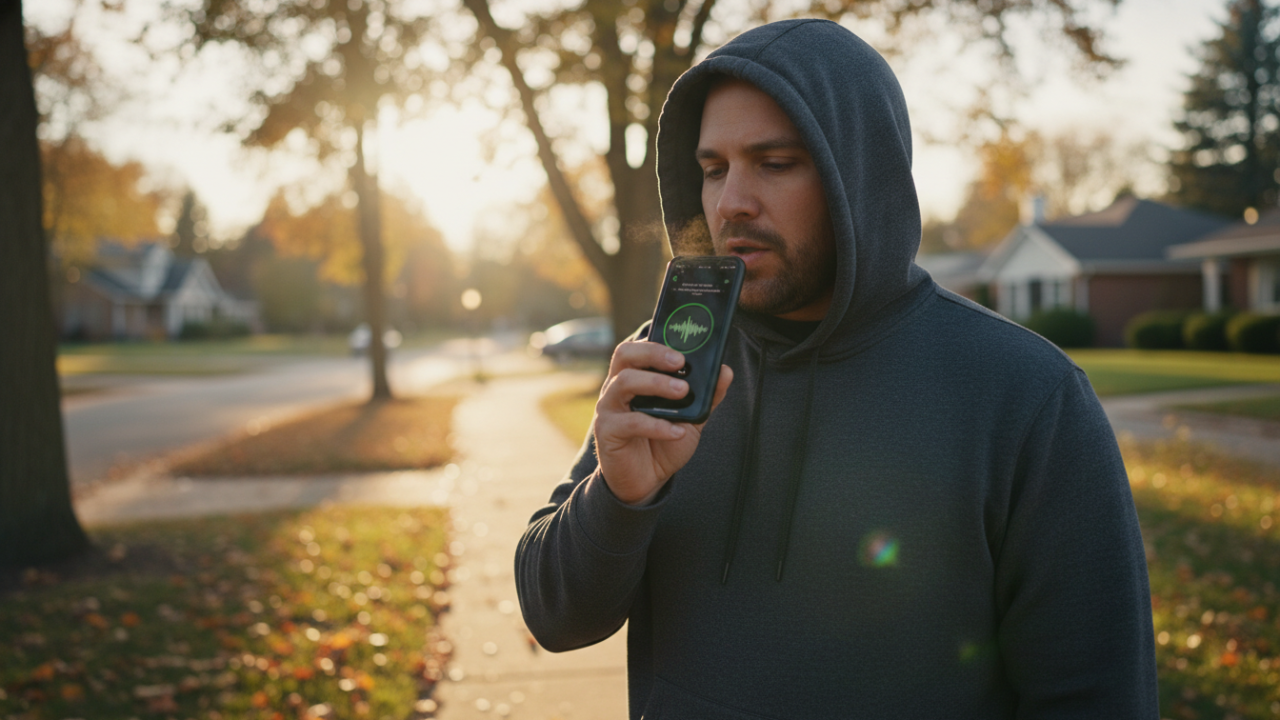
He Talks Into His Phone on Dog Walks
Then AI Writes the Blog
The hardest part of writing, Sam Edelstein decided, wasn't the writing. It was the staring.
The blank page. The blinking cursor. The half-formed idea that vanished the moment he sat down at a keyboard. So Edelstein, a data and analytics consultant who blogs on Medium about generative and agentic AI, stopped sitting down. He started walking.
Now he opens the Voice Recorder app on his Pixel — or his iPhone, depending on the week — taps record, and just talks. Sometimes he has a clear topic in mind: a proposal he owes a client, a Medium post about Anthropic's latest release, a question he's been chewing on. Sometimes he doesn't. He just needs to hear himself think.
Then he hands the transcript to ChatGPT and lets the model do what the keyboard never quite let him do.
A workflow built around how thinking actually works
In a Medium post titled How I Use Voice Recordings and AI to Draft Proposals, Posts, and Work Through Ideas, Edelstein laid out the process in detail. The first move is always the same: the phone, the native voice recorder, and a long unstructured monologue.
"Sometimes I have a subject in mind: a blog post, a work proposal, or a question I'm grappling with," he wrote. "Other times, I don't fully know what I'm trying to say — I just need to talk it out."
He deliberately avoids recording directly inside ChatGPT's mobile app. The reason is pragmatic: the native recorder saves the file locally on the phone. If the app crashes, if the signal drops, if anything goes sideways, the audio is still there. ChatGPT's transcription, by contrast, can fail mid-thought.
"And when it does," Edelstein wrote, "your whole train of thought vanishes."
The AI step: cleanup, not creation
Once the recording is done, Edelstein moves the transcript into ChatGPT and asks the model to organize it — into an outline, a tightened essay, a memo, or a draft proposal, depending on the goal. He frequently runs the output back through the model a second time for clarity or to cut length.
The pattern matters. Edelstein isn't asking AI to invent ideas. He's asking it to clean up his own.
"At that point," he wrote, "I have something I can publish or share — and most importantly, something that reflects my thinking more clearly than if I had just tried to type it out from scratch."
A fix for a problem he kept hitting in meetings
The deeper motivation surfaced in the same post. As a consultant, Edelstein kept finding himself repeating the same ideas across different meetings without ever documenting them. The thinking was happening. The artifact wasn't.
Voice plus AI closed that gap.
He now uses the workflow for blog posts on Medium, internal team memos, client proposals and what he calls "thinking pieces" — drafts where the goal isn't a finished product but a clearer view of what he actually believes. The phone-first capture means he can do it while walking the dog, doing dishes, or driving between meetings.
The editing pass is real. Edelstein doesn't publish straight from ChatGPT's output. But the heavy lift — the part that used to keep him stuck — is gone.
Native apps over fancy stacks
Notably, Edelstein's setup is almost defiantly low-tech. No paid transcription service. No automation platform. No Notion database routing things into folders. Just the voice recorder that came with the phone, ChatGPT on the other side, and a human in the middle who decides what's worth keeping.
That simplicity is part of the point. The friction that used to live in his writing process — the keyboard, the screen, the staring — is the friction he removed. Everything else is unchanged.
The takeaway for other creators
Edelstein's post landed in a moment when "AI workflow" often means a Make.com scenario with twelve modules and a paid stack of three or four tools. His version suggests the opposite is also viable: pick up the phone, talk, paste, edit, publish.
The bottleneck for most writers, he argued, isn't access to AI. It's the gap between having a thought and getting it down. A native voice recorder spans that gap in about ten seconds.
What happens after — the ChatGPT cleanup, the human edit, the published post — is just plumbing.
Source: Sam Edelstein, How I Use Voice Recordings and AI to Draft Proposals, Posts, and Work Through Ideas, Medium. https://samedelstein.medium.com/how-i-use-voice-recordings-and-ai-to-draft-proposals-posts-and-work-through-ideas-f1ed8e94e835
Stay connected with the most current Marketing News, Strategies, Tips , and Case Studies!
Join our monthly marketing magazine to receive the latest news and updates from our team of professional marketers and copywriters.
(Don't worry, your information will not be shared.)




Recent Posts

Expert Marketers Interviews
Listen to the Podcasts