
He Wrote 100 Blog Posts With AI - Here's What He Stopped Believing
He Wrote 100 Blog Posts With AI
Here's What He Stopped Believing.
Thomas Smith has now written more than 100 blog posts with help from generative AI. He still types most of them with his thumbs.
Smith, the Medium curator for the platform's Artificial Intelligence topic and the founder of The Generator — a publication dedicated to generative AI news, tool reviews and experiments — has spent over a year running a one-man experiment most journalists are too polite to admit they're running. He's written fully human articles. He's written fully AI articles. He's written hybrid pieces where the model drafts and he edits. Then he watched what happened.
His conclusion is messier than the AI hype cycle wants it to be.
The iPhone, the Notes app, the microphone button
Smith's mobile-first wrinkle is almost embarrassingly simple. In a post on The Generator titled How I Built an AI-Powered Tool for Blogging With Your Voice, he described stumbling onto a discovery: large language models are remarkably good at cleaning up messy automatic transcripts.
Feed ChatGPT the kind of garbled text that comes out of YouTube auto-captioning or a rough podcast transcription, and it returns something that reads as if a human wrote it the first time.
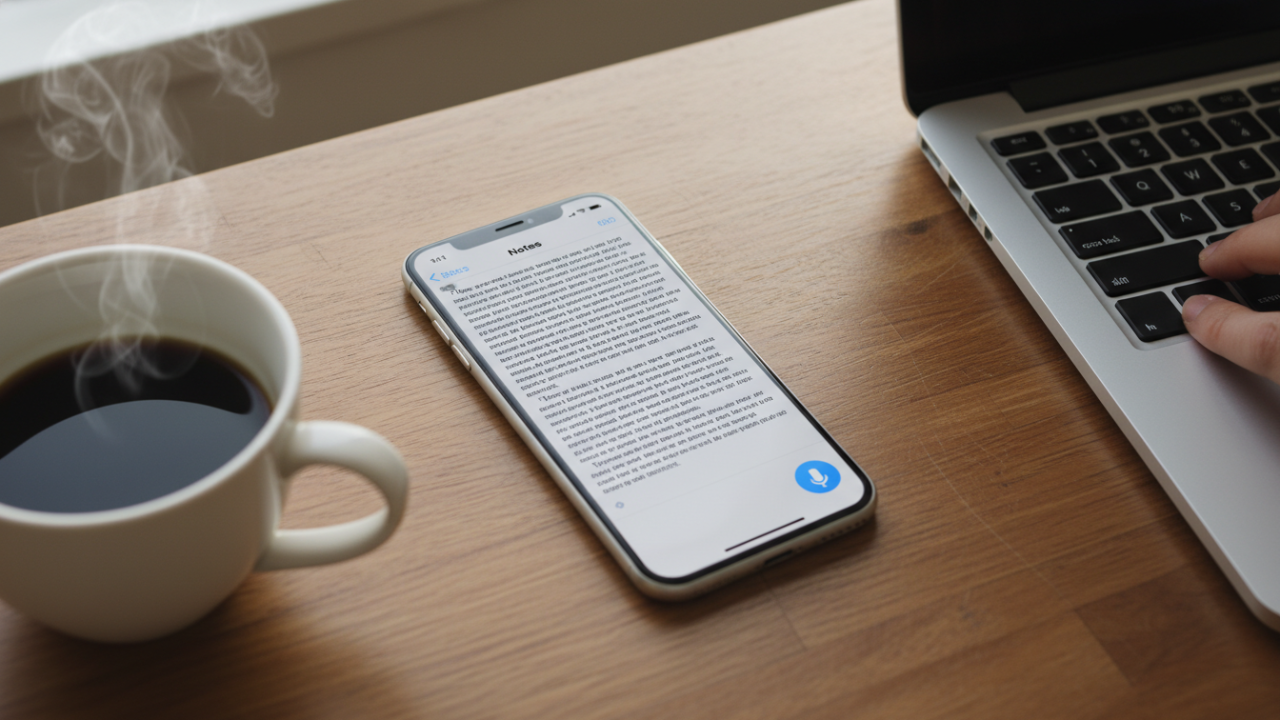
That insight changed Smith's workflow. He started opening the Notes app on his iPhone, tapping the microphone button to enable voice typing, and dictating blog posts on the move. The transcript was rough. The model fixed it. The post got written.
Award-winning, but not omniscient
Smith's perspective on AI writing isn't the breathless one he often pushes back against in his own coverage. In a separate, widely-read piece for The Generator titled What I Learned From Writing 100+ AI-Assisted Blog Posts, he laid out what he'd actually observed.
"AI chatbots like ChatGPT are terrible at writing certain content," he wrote — adding, in the same paragraph, that even as a professional writer earning thousands from his work, ChatGPT was better than him at writing certain types of articles.
That second admission is the one most working writers don't make.
Where AI earns its keep — and where it doesn't
The 100-post post catalogued the categories where Smith found AI genuinely helpful: structured how-tos, summaries, listicles, tool reviews and any piece where the goal is conveying information efficiently. He also flagged categories where the model collapsed: anything requiring lived experience, original reporting, voice-driven commentary or jokes that depend on cultural nuance.
The implication for his mobile workflow is clear. Smith doesn't dictate a finished essay into his phone and publish whatever ChatGPT spits back. He dictates raw input. He uses AI for the cleanup pass — the punctuation, the paragraph breaks, the structure that turns a stream of speech into something legible. The judgment of what to write, and what's actually worth saying, stays with him.
The publishing side: Medium, Boost, and curation
Smith's perch as a Medium Boost curator for AI gives the experiment additional weight. He sees thousands of AI-related submissions across the platform — and he keeps publishing his own at a clip that would exhaust most full-time writers.
In an interview on The Copywriter Club podcast about writing on Medium, Smith returned to the same point. The model is a force multiplier, not a replacement. The writers who treat it as a replacement produce content that, in his words, the platform's curation systems and human readers both eventually filter out.
He's spent a year watching that filter work.
A pragmatic mobile stack
For creators trying to replicate the approach, Smith's setup translates cleanly. The Notes app ships free on every iPhone. The microphone button has been there for years. ChatGPT's mobile app handles the cleanup step. No subscriptions beyond ones most creators already pay for.
What can't be downloaded is the editorial judgment that decides which dictated drafts deserve to become posts and which ones belong in the trash. Smith spends the freed-up time on that decision, not on retyping his own thoughts.
The honest middle
Smith's larger contribution to the AI-writing conversation may be that he refuses to occupy either pole. He doesn't claim the model is a creative partner indistinguishable from a human collaborator. He doesn't claim it's a hallucinating menace that should be banned from newsrooms. He claims it's a tool that does some jobs well and others badly — and that the writer's job is to know which is which.
A hundred posts in, he's still publishing. The dictation step is still on the iPhone. The cleanup step is still ChatGPT. And the decisions about what's worth saying are still, as far as he can tell, irreducibly his.
Sources:
- Thomas Smith, How I Built an AI-Powered Tool for Blogging With Your Voice, The Generator, Medium. https://medium.com/the-generator/how-i-built-an-ai-powered-tool-for-blogging-with-your-voice-7b61aeed4f8c
- Thomas Smith, What I Learned From Writing 100+ AI-Assisted Blog Posts, The Generator, Medium. https://medium.com/the-generator/what-i-learned-from-writing-100-ai-assisted-blog-posts-39374763951b
Stay connected with the most current Marketing News, Strategies, Tips , and Case Studies!
Join our monthly marketing magazine to receive the latest news and updates from our team of professional marketers and copywriters.
(Don't worry, your information will not be shared.)



Recent Posts

Expert Marketers Interviews
Listen to the Podcasts