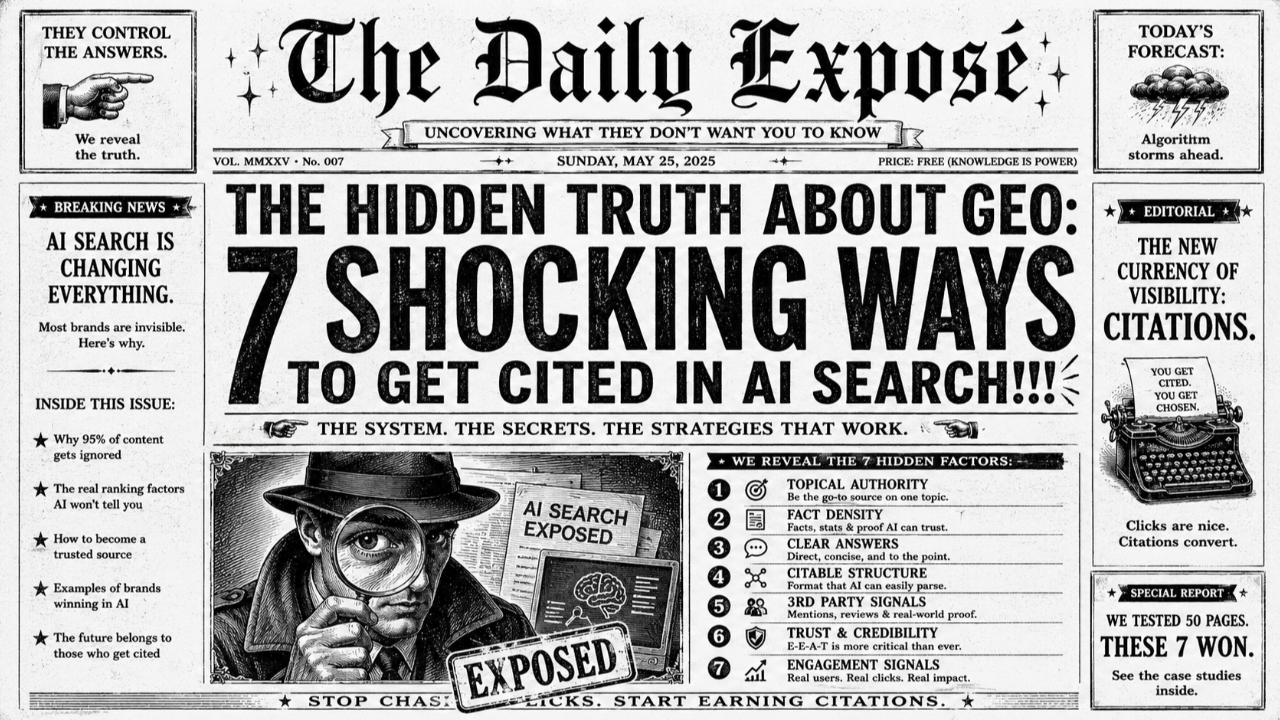
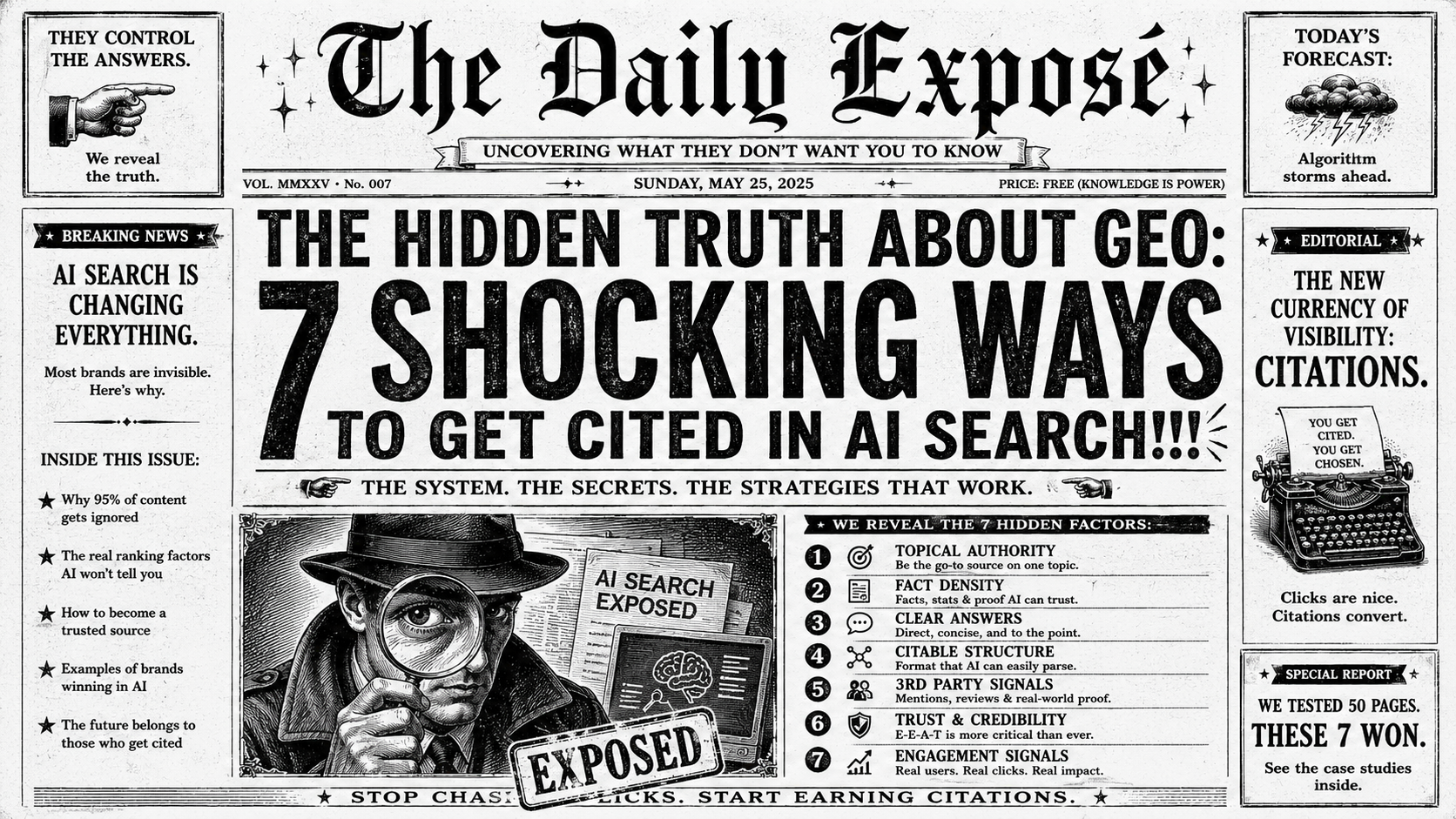
The Hidden Truth About GEO: 7 Shocking Ways to Get Cited in AI Search
The old SEO playbook is fading fast. You can feel it in your traffic charts. You can also see it in how people search now.
Most of us do not want ten links anymore. We want one clear answer. And we want it right now.
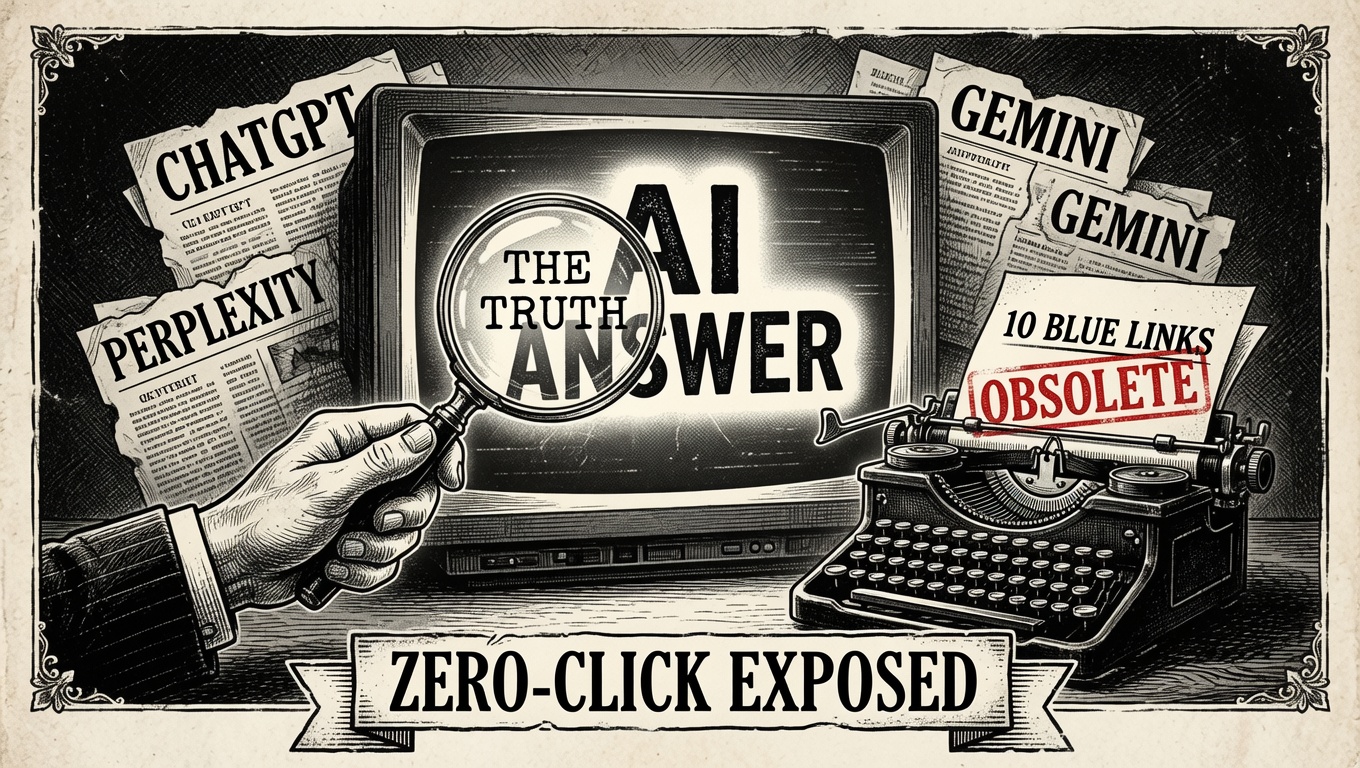
That is why people are using ChatGPT, Perplexity, Gemini, and Google AI Overviews. They ask a full question, and the tool replies in seconds.
If your business depends on organic clicks, this can look scary. But I see a bigger truth. This shift is also a huge chance to win.
AI tools do not “invent” most helpful answers. They pull from the live web, summarize it, and often cite sources.
Your new goal is simple. You want the AI to trust you enough to name you. That mention can bring the best kind of customer.
What changed in search, and why “zero-click” is now normal
Why the ten blue links are losing power
For years, the deal was clear. You published content, and Google sent you clicks. That deal is breaking.
People are tired of pop-ups, cookie banners, and slow pages. They would rather get the answer inside the AI box.
Many searches now end without a click to any website. The AI gives a summary, and the user moves on.
What “zero-click” means for your business
Zero-click does not mean zero value. It means the value moved upstream. The “moment of trust” now happens inside the AI answer.
If the AI recommends your brand, you can still win the sale. The user may not click right away. They may search your brand name directly later.
That direct brand search is a strong signal of intent. It often converts better than casual blog traffic.
What to focus on instead of rankings
Rankings still exist, but they matter less than before. In AI search, visibility often means being cited as a source.
Think of it like this. Old SEO was trying to get a spot on a shelf. GEO is trying to become the label the clerk recommends.
- Old goal: more clicks from generic keywords.
- New goal: more mentions and citations in AI answers.
- Best outcome: more direct brand searches and high-intent leads.
How AI engines decide what to recommend

What AI is doing behind the scenes
When you ask an AI tool a question, it often does live research. It searches the web, pulls pages, and breaks them into small pieces.
Those pieces are like note cards. The system compares them and builds one clean response. If your page is hard to “slice,” you get skipped.
Why people search in full sentences now
People do not type “marketing strategy” as much anymore. They type something like, “I am a solo founder with no budget. How do I get clients?”
AI tools handle this by splitting one big question into many smaller ones. Then they search for each part at the same time.
This matters for your content. You must answer specific sub-questions clearly, not just cover a broad topic.
Why AI distrusts salesy content
AI systems try to avoid giving bad advice. They know company websites can be biased.
So they look for outside proof. They check forums, reviews, podcasts, and media mentions. They want to see real people talking about you.
If only your website claims you are great, the AI may not risk recommending you. It wants consensus, not slogans.
The golden rule of GEO: increase fact density so you get cited
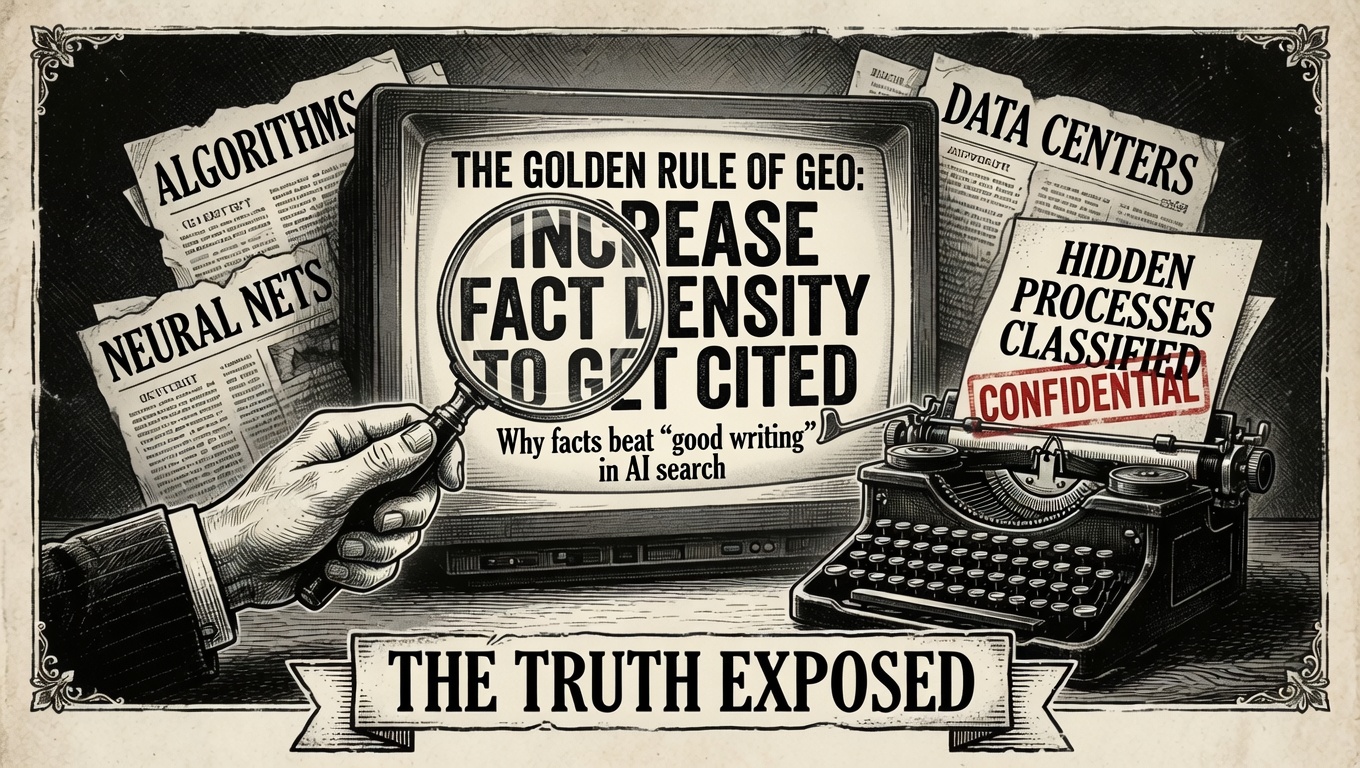
Why facts beat “good writing” in AI search
Good storytelling still matters for humans. But AI tools reward clear, verifiable facts.
These systems are like careful researchers. They want numbers, definitions, and proof they can point to.
As one simple idea goes, “Traffic is a vanity metric. Citations are the new currency.” That is the mindset shift.
What “fact density” looks like on a real page
Fact density means you replace vague claims with measurable outcomes. You also show where the numbers came from.
Here is the difference in plain language. The first line is fluffy. The second line is cite-able.
- Fluffy: “Our tool saves teams tons of time and boosts productivity.”
- Dense: “Teams cut internal emails by 42% and save 11.4 hours weekly, based on a 2025 user audit.”
The second version gives the AI something solid to reuse. It has numbers, a timeframe, and a source type.
Two facts per section is a strong starting rule
When you write a key section, add at least two “anchors.” Anchors help the AI feel safe citing you.
- Quantified outcomes: percentages, dollars, time saved, error rates, conversion lifts.
- Expert quotes: short lines from credible people, with names and roles.
- Attributed data: benchmarks from studies, reports, or audits you can explain.
If you do this across your site, you stop sounding like an ad. You start sounding like a reference book.
How to write and format content so AI can extract it fast
Use “bottom line up front” in every important section
AI tools have limited attention per chunk. So you should lead with the answer, not the warm-up.
Aim for a tight 40–60 word summary right under each major heading. Then add proof, examples, and steps after.
Think of it like a news report. The headline and first paragraph carry the key facts.
Create “information islands” that stand alone
An information island is a short block that makes sense by itself. If an AI lifts it out, it still works.
Keep each island around 120–180 words. Use a simple structure the machine can follow.
- State the direct answer in one or two sentences.
- Add supporting proof, like metrics or a quote.
- End with a clear next step the reader can take.
Turn vague headings into real questions
Clever headings look nice, but they confuse machines. AI matches user questions to your headings.
So write headings like a person would type them. Make them specific and plain.
- Too vague: “The Scaling Dilemma”
- Better: “What are the biggest challenges when scaling a remote consulting agency?”
Use lists like you mean it
Lists are easy for AI to parse. They also help your human readers scan faster.
When you recommend tools, steps, or options, use bullets with clear labels.
- Team chat: Use Slack to reduce email threads and speed up decisions.
- Docs: Use Notion to store processes and onboarding guides.
- Projects: Use Asana to track deadlines and client deliverables.
Technical setup: make your website easy for AI crawlers to read
Use structured data so machines do not have to guess
Your site has two layers. One is for people. The other is for machines.
Structured data helps the machine understand what each page is. It is like adding labels to moving boxes.
Four types matter for most businesses:
- Organization: your name, logo, and what you do.
- Article: author, publish date, and topic.
- FAQPage: question-and-answer pairs the AI can reuse.
- SameAs: links to official profiles and trusted directories.
Do not block the wrong bots
Some companies block AI bots out of fear. That can erase you from AI search results.
There is a difference between training crawlers and search crawlers. Search crawlers help tools answer questions in real time.
If you block the search crawlers, you may never get cited. Your competitors will win by default.
Use an llms.txt file as a simple “front desk” for AI
Many site owners now add an llms.txt file. Think of it as a short guide for AI visitors.
It should explain what you do, list core services, and link to your best pages. Keep it clean and direct.
If an AI tool can understand your site in seconds, you raise your chances of being used as a source.
Build authority beyond your website with digital PR and real-world proof
Why mentions matter, even without links
Old SEO treated backlinks like votes. AI treats trusted mentions like character references.
An unlinked mention on a respected site can still help. The AI reads the text and learns the association.
This is where “co-occurrence” matters. You want your brand name near your key topics across the web.
Three practical ways to earn trust signals this month
You do not need a huge budget. You need focused effort in the right places.
- Pitch one top publication: share a data-heavy framework with real numbers.
- Join one strong podcast: show notes often get scraped and cited.
- Show up in forums: answer questions on Reddit or Quora with proof, not hype.
As she put it in a common founder complaint, “Nobody knows we exist.” Digital PR fixes that in a way AI can measure.
How to measure GEO success without obsessing over rankings
Track “Share of Model” with a simple spreadsheet
AI answers can vary by user, even with the same prompt. That makes classic rank tracking less useful.
Instead, track how often AI tools mention you across a set of prompts. That is your Share of Model.
Here is a simple weekly routine:
- List 20 customer questions your buyers actually ask.
- Run them in ChatGPT, Perplexity, and Gemini once a week.
- Record if you are mentioned, and if you are cited.
- Record which competitors show up instead.
Watch your citation rate, not just your mentions
A mention is nice, but a citation is stronger. A citation usually goes to the page with the best “anchor facts.”
If you get mentioned but not cited, add more proof. Add numbers, studies, and short expert quotes.
Check AI referrals in analytics
AI-driven visitors often behave differently. They tend to bounce less and convert more.
In your analytics tool, look for referrals from AI sources. Then compare their conversion rate to other channels.
What is coming next: AI agents will choose vendors for people
Why “agentic” search changes your website needs
We are moving from answers to actions. Soon, people will ask an AI agent to pick a vendor and book a call.
In that world, the agent may never “enjoy” your website. It will scan it like a checklist.
If your pricing and requirements are hidden, you may get filtered out. The agent needs clear specs fast.
Make your offer machine-checkable
Add a plain-text section to key pages that spells out your boundaries. Make it easy to compare you to others.
- Who you serve: industries, company size, and use cases.
- Pricing structure: tiers, ranges, or clear starting points.
- Compatibility: integrations, platforms, and requirements.
- Proof: outcomes, case studies, and third-party reviews.
If an agent can verify fit in seconds, you stay in the running. If it cannot, it moves on.
What you should do today: a simple GEO action plan
Start with one page and make it cite-able
You do not need to rebuild everything this weekend. You need one strong asset that AI tools can trust.
Pick your most important service page or your best case study. Then make these changes:
- Add a 50-word bottom-line summary under the main heading.
- Insert two hard metrics and explain where they came from.
- Rewrite headings as real questions your customers ask.
- Break long text into short “information islands.”
- Add one list that compares options or steps clearly.
Then add one outside trust signal
Next, earn one third-party mention. Pitch one podcast, one newsletter, or one industry blog.
Bring a unique framework and real data. Make it easy for others to quote you.
If you want, tell me what you sell and who you sell it to. I can help you draft ten prompts to track your Share of Model next week.
Stay connected with the most current Marketing News, Strategies, Tips , and Case Studies!
Join our monthly marketing magazine to receive the latest news and updates from our team of professional marketers and copywriters.
(Don't worry, your information will not be shared.)

Recent Posts
Expert Marketers Interviews
Listen to the Podcasts